Wait!
Urgent Emergency Fire Cleanup Needs in Conshohocken, PA? Calls are answered 24/7.
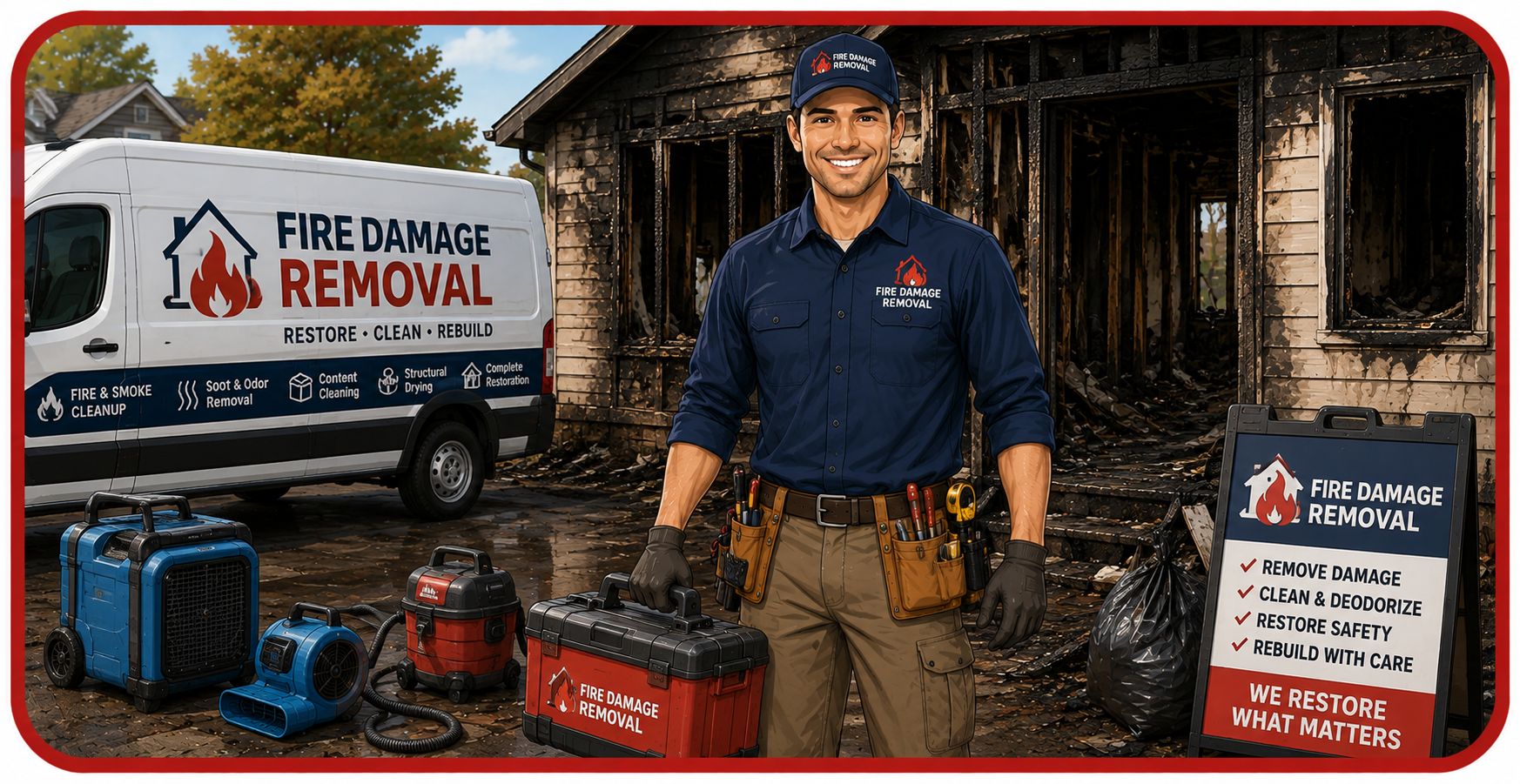
Call now to get connected to a certified Emergency Fire Cleanup specialist near you.
📞 Call Now +1-866-484-1409Similar Partner Services:
Water from firefighting starts mold colonization in 24 hours. Smoke residue bonds permanently within 72. Delay is not free -- it multiplies cost. Call now and our team is on site within 60 minutes.
Every aspect of how we operate is designed around one measurable reality: delayed mitigation is the most expensive mistake a property owner can make after a fire.
We commit to on-site arrival within 60 minutes of your call in our service area, around the clock. Not a target or a typical -- a commitment. Because the cost multiplication factor begins the moment the fire is out.
Our immediate mitigation actions -- water extraction, residue treatment, structural exposure boarding -- are specifically sequenced to prevent progressive loss escalation from converting manageable damage into major reconstruction.
We produce a complete mitigation report within hours of arrival -- timestamped photos, moisture readings, scope notes, and damage assessment. Adjusters view documented professional mitigation very differently from undocumented delay.
Our teams address the three main secondary damage pathways simultaneously: firefighting water, smoke residue bonding, and structural exposure. Leaving any one of these unaddressed starts a second, parallel damage progression.
Restoration costs are not static. The same damage that costs one amount to address at hour 0 costs measurably more at hour 6, significantly more at hour 24, and potentially multiples of the original estimate by hour 72. This is not speculation -- it is the documented mechanics of how fire damage compounds.
Fire suppression water is still surface-level. Smoke residue has not bonded deeply. All affected materials are potentially salvageable with professional treatment.
Lowest CostFirefighting water has absorbed into subfloor, drywall, and insulation. Mold colonization risk activating. Soft goods and porous surfaces absorbing smoke residue at accelerating rate.
Rising CostWhat was water damage is now a mold remediation project. Smoke residue on porous surfaces may now be irreversible. Soft goods typically unrecoverable. Structural materials at risk.
High CostSecondary damage may now exceed the cost of the original fire damage. Insurance adjusters reviewing this timeline will assess whether duty to mitigate was met. Scope expands significantly.
Maximum CostWhen firefighters leave a property, most homeowners assume the crisis is over. The fire is out. The immediate danger has passed. What they do not yet know is that a second, financially consequential event has already started -- and its cost is measured in hours. Every hour that passes between the fire being extinguished and professional mitigation beginning is an hour of progressive loss escalation actively increasing the total bill for the property. Understanding this cost multiplication factor is the single most important thing a property owner can know in the first minutes after a fire.
The mechanics are not complicated. Firefighting water is the first driver. Professional firefighters use significant volumes of water to suppress even a modest structural fire. That water does not stay where it lands. Within the first few hours, it begins absorbing into subfloor material, drywall cavities, insulation, and wall framing. Water in those locations is the precondition for mold colonization, which typically begins within 24 to 48 hours at normal indoor temperatures. Water extraction that would have been straightforward at hour 2 becomes mold remediation at hour 36. Mold remediation costs are categorically higher than water extraction costs -- and they keep compounding the longer the colonization is active.
The second cost driver is smoke residue. Immediately after a fire, smoke residue sits on surfaces in a partially bonded state. Professional treatment at this stage can address the residue effectively on most surface types. As hours pass, the residue undergoes a progressive bonding process driven by the chemistry of combustion byproducts and the surface material's reaction to them. By 24 hours, residue on porous materials including painted drywall, soft furnishings, and wood is significantly harder to remove. By 72 hours, it is often chemically bonded deeply enough that no amount of cleaning will restore the surface -- only repainting, refinishing, or replacement. Treatment that cost a fraction of replacement at hour 4 has become replacement at hour 72. This is not gradual; the curve steepens sharply.
Property insurance policies in most states include a clause called the duty to mitigate. It requires policyholders to take reasonable steps to prevent further damage following a covered loss event. Failing to call for professional mitigation after a fire, or waiting days before doing so, creates documented grounds for an insurance adjuster to reduce or partially deny portions of the claim. The adjuster's position is straightforward: if professional intervention at hour 2 would have prevented $40,000 of secondary mold and structural damage that developed by day 4, the policyholder had a documented obligation to make that call. The adjuster-documented negligence determination is not automatic, but delay without documentation of professional mitigation attempts creates real exposure for policyholders at the claims stage.
When our team arrives on site, the first two hours are the most consequential. The initial priority is site safety clearance -- confirming that structural hazards, electrical risks, and air quality concerns are identified before any equipment is brought in. Following clearance, water extraction begins immediately. Portable extraction equipment addresses standing water and begins pulling absorbed water from flooring and wall base materials before it penetrates further. Simultaneously, smoke residue treatment is initiated on the highest-priority surfaces -- those most likely to cross into irreversible staining within the next 24 hours. Emergency structural tarping and boarding is applied to any roof, wall, or window openings that create weather exposure risk. Throughout this entire process, our team is generating the mitigation documentation that your insurance carrier will need: timestamped photographs, written damage assessment, moisture readings, and a scope of work summary. This documentation, produced in the first hours, becomes the evidentiary record for your claim -- not produced days later when memories fade and conditions have changed.
The call you make in the first hour after a fire is among the most financially consequential decisions you will make in the entire restoration process. It shapes the scope of secondary damage, the coverage position of your insurance carrier, and the total cost of bringing your property back. Our dispatch is active around the clock specifically because fire damage does not wait for business hours -- and neither should the response.
Each service addresses a distinct cost driver. The first two hours on site are structured to activate all six simultaneously, because every minute any one of these is left unaddressed is a minute of additional damage accumulating in parallel.
Before any equipment enters, our team assesses structural stability, electrical hazard status, and air quality. A property that is not cleared for entry cannot be mitigated safely. This phase happens on arrival and typically clears within the first 20 minutes so mitigation work can begin immediately.
Standing water and water absorbed into flooring, wall bases, and subfloor materials is extracted using commercial-grade equipment. Speed matters here: every hour of dwell time is an hour of deeper penetration. Rapid extraction is the primary prevention mechanism against mold colonization.
High-priority surfaces are treated for smoke residue using sequenced dry and chemistry-safe wet methods before the bonding timeline advances further. Identifying which surfaces are approaching the irreversible threshold drives our treatment prioritization in the first hours on site.
Fire-damaged materials that pose secondary hazard risk, including charred structural elements, compromised flooring sections, and debris that blocks access to affected areas, are removed and documented. Hazard removal allows full access for moisture and residue treatment in previously blocked areas.
Roof damage, broken windows, and compromised wall sections create direct weather exposure to a property that is already saturated with firefighting water. Emergency tarping and boarding closes these openings immediately to prevent rain, wind, and temperature changes from compounding the damage profile before permanent repairs begin.
From the moment we arrive on site, we produce a timestamped, documented mitigation record: written damage assessment, scope of work, moisture readings, and photographic evidence of pre-mitigation and post-mitigation conditions. This report is delivered to you and, on authorization, directly to your adjuster to support the claims process.
Our response protocol is built to compress the time between your call and active mitigation to the absolute minimum. The four steps happen in tight sequence precisely because the clock is running from the moment the fire is out.
Call +1-866-484-1409 any hour of the day or night. Our dispatcher confirms your location, takes a brief damage description, and commits to on-site arrival within 60 minutes. No hold queues, no callbacks required, no next-business-day scheduling for emergency events.
Our team begins with a rapid but thorough safety clearance, then conducts a structured damage assessment covering water penetration extent, smoke residue surface coverage, structural compromise indicators, and weather exposure risk. This assessment drives the prioritization of every action that follows.
Water extraction, smoke residue treatment, and emergency tarping or boarding are activated simultaneously to address all three secondary damage pathways at once. Sequential treatment would allow whichever pathway is unaddressed to continue advancing while the others are handled. Simultaneous treatment is the only way to prevent progressive loss escalation across the whole property.
Before our team leaves, you receive a complete mitigation report documenting all damage observed, all actions taken, all moisture readings recorded, and the timeline of every intervention. This document is specifically formatted to support insurance claims and to demonstrate that duty to mitigate was fully met from the first hour of the emergency.
These three customers reached us within the first hours of their fire events. Each one walked through the claims process with full mitigation documentation and avoided the secondary damage costs that delay would have added to their situation.
Team arrived 47 minutes after I called at 2 AM. I genuinely did not expect anyone to pick up, let alone show up that fast. They were extracting water and treating the smoke damage while I was still processing what had happened. My adjuster later told me the mitigation report they produced was exactly what he needed to approve the claim quickly.
My contractor estimated my restoration at around $85,000 when I first called him the morning after the fire. After professional emergency mitigation, the final scope came in at $41,000. The difference was that the water was pulled out before it soaked into the subfloor and framing. The mitigation cost paid for itself many times over compared to what the damage would have become by day three.
My insurance company initially raised questions about secondary mold damage that developed on one wall I could not get to quickly. When I submitted the timestamped mitigation report showing that the area had been treated within two hours of the call, the adjuster accepted the claim without reduction. Having that documentation ready from the first night made a real difference in how the claim was handled.
Available 24/7 in Conshohocken, Conshohocken, PA
Every hour of delay adds real, measurable cost to your total restoration bill. One call to +1-866-484-1409 gets a team on site within 60 minutes and the mitigation documentation clock started immediately.